Key Takeaway:
Nattokinase is a fibrinolytic enzyme from fermented soybeans that directly dissolves fibrin clots and may degrade spike protein. Published research (PMC9458005) demonstrates nattokinase can break down SARS-CoV-2 spike protein in laboratory settings. The standard dose is 2,000 FU twice daily on an empty stomach.
Quick Answer:
Nattokinase benefits include fibrin clot dissolution, potential spike protein degradation, blood pressure support, and cardiovascular protection. Take 2,000 FU (fibrinolytic units) twice daily on an empty stomach. Avoid if taking blood thinners like warfarin without medical supervision.
What Is Nattokinase?
Nattokinase is a potent fibrinolytic (clot-dissolving) enzyme originally isolated from natto, a traditional Japanese food made from soybeans fermented with Bacillus subtilis var. natto. The enzyme was first discovered in 1987 by Dr. Hiroyuki Sumi, a researcher at the University of Chicago, who observed that natto could dissolve artificial blood clots (thrombi) in a petri dish far more effectively than other traditional foods he had tested.
Unlike many dietary supplements that rely on indirect mechanisms, nattokinase acts directly on fibrin, the structural protein that forms the mesh-like scaffold of blood clots. This direct enzymatic action is what distinguishes nattokinase from other natural blood-thinning agents like garlic or fish oil, which primarily affect platelet aggregation rather than fibrin itself.
The Japanese have consumed natto for over 1,000 years as a staple breakfast food, and Japan consistently ranks among the countries with the longest life expectancy globally. While nattokinase is only one component of natto, epidemiological studies suggest that regular natto consumption is associated with reduced cardiovascular mortality, particularly in women, according to a 2017 study published in the British Medical Journal.
Today, nattokinase is available worldwide as a dietary supplement, typically derived from the same fermentation process used to make natto but purified and concentrated into capsule or tablet form. Modern supplements often remove vitamin K2 (which is naturally present in natto) to make the product safer for people taking anticoagulant medications.
How Nattokinase Works: Mechanism of Action
Nattokinase operates through multiple complementary mechanisms that collectively support healthy circulation and fibrinolytic balance. Understanding these pathways helps explain why this enzyme has attracted significant research interest.
Direct Fibrinolysis
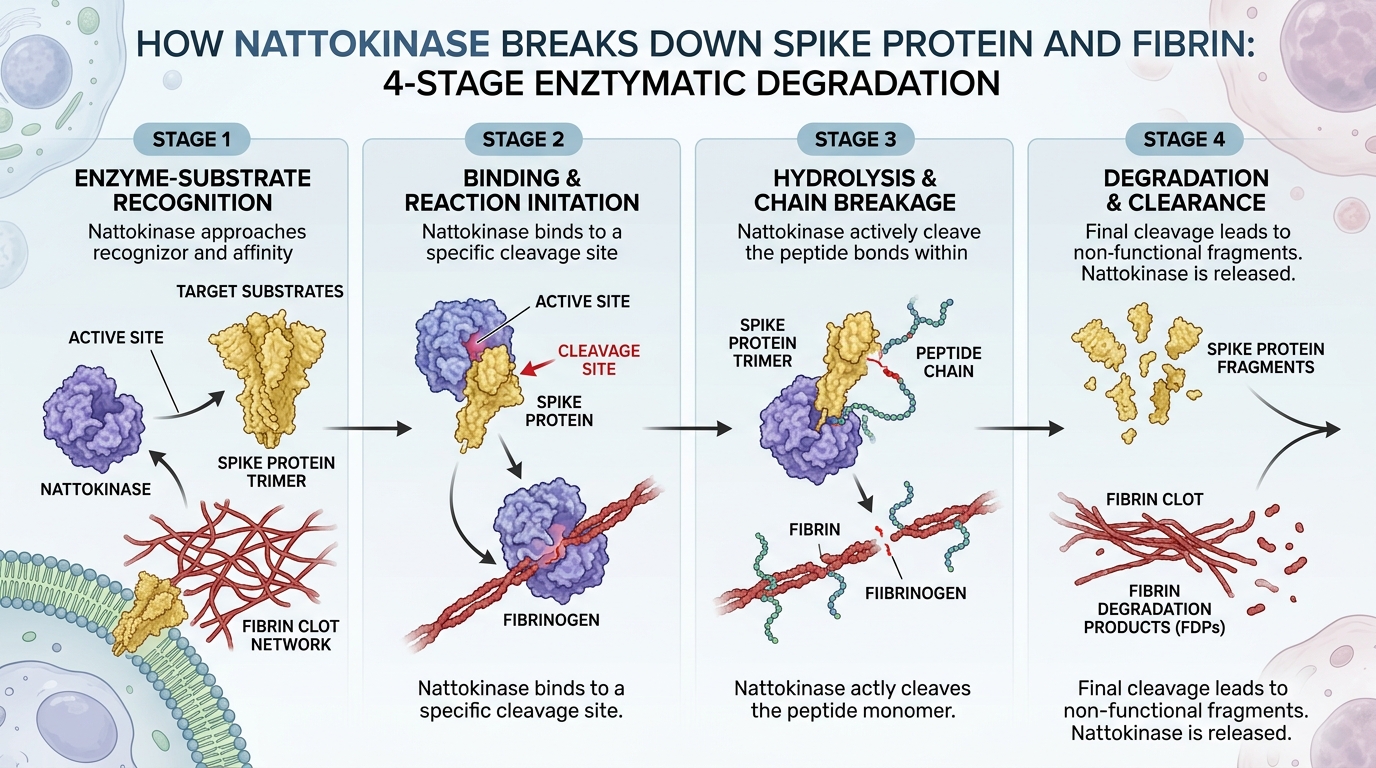
The primary mechanism of nattokinase is its ability to directly cleave fibrin, the insoluble protein that forms the structural basis of blood clots. Unlike pharmaceutical thrombolytics (such as tissue plasminogen activator, or tPA), nattokinase works through a subtilisin-like serine protease mechanism, breaking cross-linked fibrin strands into smaller, soluble degradation products that the body can clear naturally.
Research published in Biological & Pharmaceutical Bulletin demonstrated that nattokinase has approximately four times the fibrinolytic activity of plasmin, the body's own primary clot-dissolving enzyme. This potency, combined with its oral bioavailability, makes nattokinase unique among natural fibrinolytic agents.
Indirect Fibrinolytic Enhancement
Beyond its direct fibrin-dissolving action, nattokinase also enhances the body's own fibrinolytic system through several indirect pathways:
- Tissue Plasminogen Activator (tPA) Activation: Nattokinase increases the body's production of tPA, the enzyme that converts plasminogen to plasmin, amplifying the natural clot-dissolving cascade.
- Urokinase Enhancement: Studies show nattokinase increases urokinase activity, another key endogenous fibrinolytic enzyme.
- Plasminogen Activator Inhibitor-1 (PAI-1) Suppression: Nattokinase may reduce levels of PAI-1, a protein that inhibits fibrinolysis. Elevated PAI-1 is associated with increased thrombotic risk and has been identified as a factor in post-COVID conditions.
Anti-Inflammatory Activity
Emerging research suggests that nattokinase possesses anti-inflammatory properties independent of its fibrinolytic activity. A 2021 study in Frontiers in Molecular Biosciences found that nattokinase reduced levels of several pro-inflammatory cytokines, including interleukin-6 (IL-6) and tumor necrosis factor-alpha (TNF-alpha), both of which are elevated in chronic inflammatory conditions and long COVID.
9 Research-Backed Nattokinase Benefits
1. Blood Clot Prevention and Resolution
The most extensively studied benefit of nattokinase is its ability to help prevent and dissolve blood clots. A landmark 2015 randomized, double-blind, placebo-controlled trial published in Nutrition Research found that supplementation with 2,000 FU of nattokinase daily for 8 weeks significantly reduced fibrinogen levels, factor VII, and factor VIII in healthy subjects compared to placebo. These changes indicate a meaningful reduction in thrombotic risk factors.
A 2022 systematic review in Biomarker Insights that analyzed 13 clinical trials concluded that nattokinase supplementation consistently demonstrated anticoagulant and antithrombotic effects across diverse populations, reinforcing its potential as a natural approach to cardiovascular protection.
2. Blood Pressure Reduction
Several clinical trials have demonstrated that nattokinase may support healthy blood pressure levels. A 2008 randomized controlled trial in Hypertension Research involving 86 participants found that 2,000 FU of nattokinase daily for 8 weeks produced a statistically significant reduction in both systolic blood pressure (average 5.55 mmHg decrease) and diastolic blood pressure (average 2.84 mmHg decrease) compared to placebo.
The blood pressure-lowering effect is thought to involve nattokinase's ability to inhibit angiotensin-converting enzyme (ACE), similar in principle to pharmaceutical ACE inhibitor medications, though less potent. This dual action on both clotting and blood pressure makes nattokinase particularly interesting for overall cardiovascular health.
3. Improved Circulation
By breaking down excess fibrin in the blood, nattokinase may help reduce blood viscosity (thickness) and improve overall circulation. A 2016 study in Scientific Reports used laser speckle flowgraphy to demonstrate that a single dose of nattokinase significantly increased retinal blood flow in healthy subjects within 2 hours of ingestion, providing direct evidence of improved microcirculation.
4. Atherosclerosis Protection
Research suggests nattokinase may help protect against atherosclerosis, the buildup of plaque in arterial walls. A 2009 study published in Atherosclerosis found that nattokinase supplementation (6,000 FU daily for 26 weeks) was associated with a reduction in common carotid artery intima-media thickness (CCA-IMT) and plaque size in patients with atherosclerotic plaques. These findings suggest that nattokinase may help slow or potentially reverse arterial plaque development.
5. Spike Protein Degradation
A 2022 study by Tanikawa et al. published in Molecules demonstrated that nattokinase effectively degraded SARS-CoV-2 spike protein on the surface of cells in laboratory conditions. The spike protein was broken down in a dose-dependent and time-dependent manner, with near-complete degradation observed at higher concentrations. This finding is discussed in detail in the dedicated section below.
6. Deep Vein Thrombosis (DVT) Prevention
For individuals at risk of DVT, particularly during long-haul travel, nattokinase has shown promise as a preventive measure. A 2003 study published in Angiology examined 186 high-risk passengers on long-haul flights (7-8 hours) and found that those taking a nattokinase-containing supplement had no DVT events, compared to 5 cases in the control group.
7. Lipid Profile Improvement
Some research indicates nattokinase may have beneficial effects on blood lipid levels. A 2009 randomized controlled trial in Asia Pacific Journal of Clinical Nutrition found that nattokinase supplementation (3,600 FU/day for 8 weeks) was associated with significant reductions in total cholesterol, LDL cholesterol, and triglycerides, along with an increase in HDL cholesterol.
8. Neuroprotective Potential
Emerging research suggests nattokinase may have neuroprotective effects. A 2013 study in Stroke found that nattokinase demonstrated fibrinolytic activity in a rat model of cerebral ischemia without the hemorrhagic complications seen with conventional thrombolytic agents. While human studies are needed, this suggests potential applications for neurological conditions where fibrin accumulation plays a role.
9. Anti-Fatigue Effects
Improved circulation from nattokinase supplementation may contribute to reduced fatigue, a symptom frequently reported in long COVID and chronic inflammatory conditions. While direct studies on nattokinase and fatigue are limited, the improved oxygen delivery resulting from enhanced blood flow and reduced viscosity provides a plausible mechanism for the subjective energy improvements reported by many users.
Nattokinase and Spike Protein Degradation
The relationship between nattokinase and SARS-CoV-2 spike protein has become one of the most discussed topics in post-COVID health research. The key study driving this interest was published in August 2022 by Tanikawa et al. in the peer-reviewed journal Molecules.
What the Study Found
The researchers treated cells expressing SARS-CoV-2 spike protein (S protein) with nattokinase in a laboratory setting. Key findings included:
- Nattokinase degraded spike protein on the cell surface in a dose-dependent manner (more nattokinase = more degradation)
- Degradation was also time-dependent (longer exposure = greater effect)
- The S protein was broken down when cells were lysed and incubated with nattokinase, confirming direct proteolytic activity
- The receptor-binding domain (RBD) of the spike protein, which is responsible for ACE2 receptor attachment, was specifically degraded
What This Means and What It Does Not
However, previous research has confirmed that nattokinase is orally bioavailable, meaning it is absorbed from the gut into the bloodstream in active form. A 2018 study in Scientific Reports demonstrated that nattokinase reached peak plasma concentration approximately 13 hours after oral ingestion, suggesting that systemic delivery of active enzyme does occur.
Several integrative medicine practitioners, including Dr. Peter McCullough (a cardiologist and internist), have incorporated nattokinase into spike protein detox protocols based on this and related research. The McCullough Protocol recommends nattokinase alongside bromelain and curcumin as a three-component approach to spike protein management.
Ongoing Research
As of early 2026, additional studies are investigating nattokinase's effects on spike protein in human subjects. A clinical trial registered at ClinicalTrials.gov is examining the impact of nattokinase supplementation on D-dimer levels and inflammatory markers in post-COVID patients. Results are anticipated to provide more definitive evidence regarding the clinical applicability of the in vitro findings.
Nattokinase Dosage Guide
Nattokinase dosing is measured in fibrinolytic units (FU), which reflect the enzyme's actual clot-dissolving activity. Here are the evidence-based dosage ranges for various applications:
| Purpose | Daily Dosage (FU) | Timing | Duration |
|---|---|---|---|
| General cardiovascular support | 2,000 FU | Once daily, empty stomach | Ongoing |
| Blood pressure support | 2,000 FU | Once daily | 8+ weeks |
| Spike protein protocol | 2,000-4,000 FU | Divided, 2x daily | 3-12 months |
| Travel DVT prevention | 2,000 FU | 2 hours before flight | Day of travel |
| Post-COVID recovery | 4,000 FU | Divided, 2x daily | 3-6 months minimum |
- Take on an empty stomach (30-60 minutes before meals or 2 hours after eating)
- Start with 2,000 FU and increase gradually if needed
- Take consistently at the same time each day
- Store supplements in a cool, dry place to maintain enzyme activity
Side Effects and Safety Considerations
Nattokinase has been consumed as part of the traditional Japanese diet for centuries and has a strong safety profile in clinical studies. However, as with any supplement that affects blood clotting, there are important considerations:
Generally Well-Tolerated Effects
- Mild gastrointestinal discomfort (rare, usually transient)
- Slight increase in bruising tendency
- Mild nausea when taken on a full stomach
Contraindications and Warnings
- Are currently taking anticoagulant medications (warfarin, heparin, rivaroxaban, apixaban)
- Are taking antiplatelet drugs (aspirin, clopidogrel) without physician approval
- Have a bleeding disorder (hemophilia, von Willebrand disease)
- Are scheduled for surgery within the next 2 weeks
- Have a soy allergy (though many supplements use non-soy substrates)
- Are pregnant or breastfeeding (insufficient safety data)
- Have very low blood pressure (hypotension)
A 2016 systematic review of nattokinase safety published in Biomarker Insights concluded that adverse events in clinical trials were mild and rare, with no serious adverse events attributable to nattokinase at doses up to 10,800 FU per day. However, the authors noted that longer-term safety data (beyond 12 months) is limited.
Best Forms of Nattokinase Supplements
Not all nattokinase supplements are created equal. When selecting a product, consider the following factors:
What to Look For
- Potency in FU, not just mg: The fibrinolytic unit (FU) measurement is what matters. Look for products that clearly state FU per serving (minimum 2,000 FU).
- NSK-SD or NSK-II designation: These are proprietary, standardized forms of nattokinase manufactured by Japan Bio Science Laboratory (JBSL) that have been used in most clinical trials. The "SD" version has vitamin K2 removed.
- Third-party testing: Look for products tested by USP, NSF International, or ConsumerLab for purity and potency verification.
- Enteric coating: While not strictly necessary (nattokinase survives stomach acid), enteric-coated capsules may improve absorption by protecting the enzyme through the acidic stomach environment.
- Vitamin K2 status: If you take anticoagulants, choose a nattokinase product that has vitamin K2 removed (look for "vitamin K2-free" or "NSK-SD" on the label).
Forms to Avoid
- Products that list only milligrams without FU activity
- Blends that include nattokinase but do not specify the FU per serving
- Products stored in warehouse conditions without temperature control (heat degrades enzyme activity)
Synergistic Combinations
Research and clinical practice suggest that nattokinase may be more effective when combined with complementary compounds. The following combinations have the most supporting evidence:
Nattokinase + Bromelain + Curcumin (McCullough Protocol)
This three-component approach is the most widely discussed spike protein detox protocol. Dr. Peter McCullough's recommended dosages:
- Nattokinase: 2,000 FU twice daily (total 4,000 FU)
- Bromelain: 500 mg once daily
- Curcumin: 500 mg twice daily (total 1,000 mg)
The rationale: nattokinase provides direct fibrinolytic and spike protein-degrading activity, bromelain adds additional proteolytic (protein-breaking) action, and curcumin contributes potent anti-inflammatory effects. A 2023 pre-print by McCullough et al. described clinical observations supporting this combination, though peer-reviewed clinical trial data is still forthcoming.
Nattokinase + Serrapeptase
Serrapeptase is another proteolytic enzyme (from Serratia marcescens) that may complement nattokinase's fibrinolytic action. Some practitioners combine 2,000 FU nattokinase with 120,000 SPU serrapeptase for enhanced protein-clearing effects. Both enzymes should be taken on an empty stomach.
Nattokinase + Omega-3 Fatty Acids
EPA and DHA from fish oil provide anti-inflammatory and anti-platelet effects that complement nattokinase's fibrinolytic activity. This combination may offer comprehensive cardiovascular protection through multiple mechanisms. A typical protocol pairs 2,000 FU nattokinase with 2,000-3,000 mg combined EPA/DHA daily.