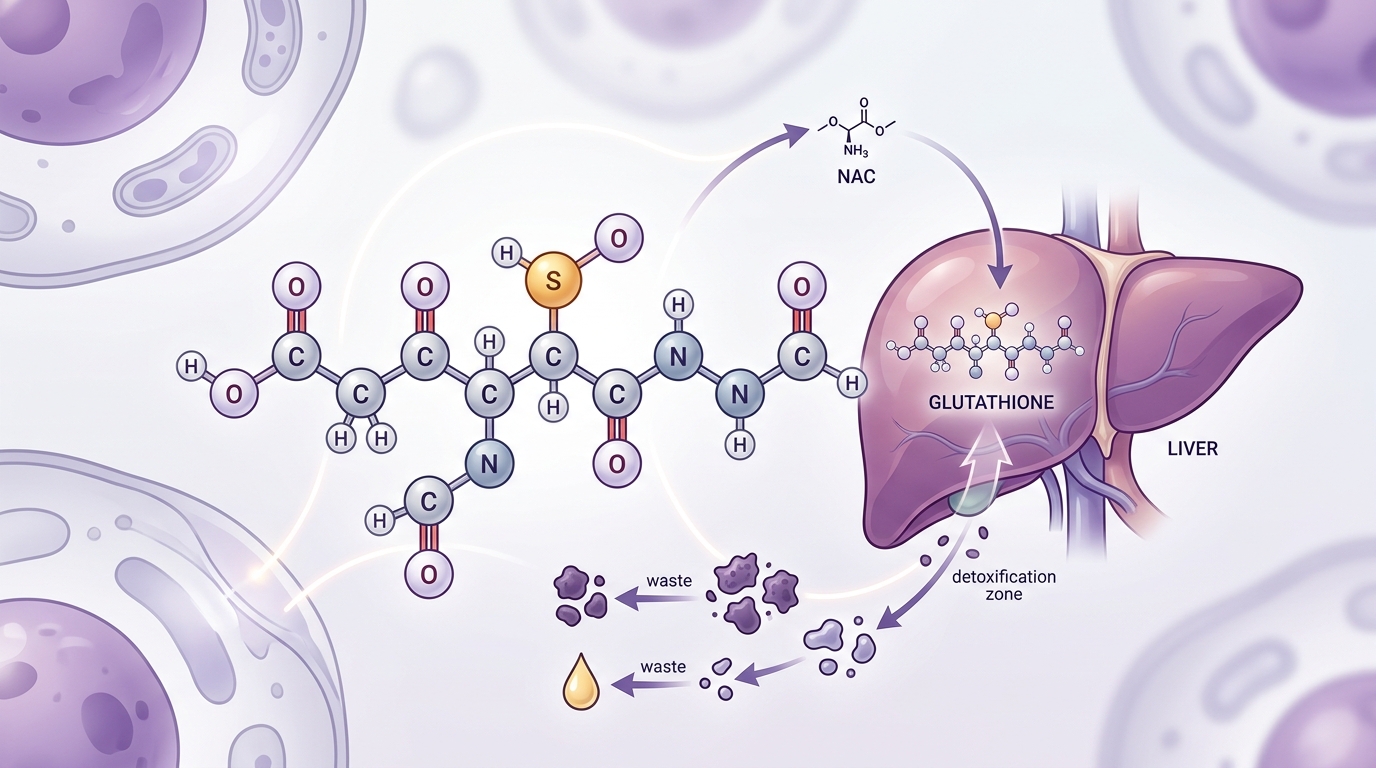
What Is NAC (N-Acetyl Cysteine)?
N-Acetyl Cysteine (NAC) is the supplemental form of the semi-essential amino acid L-cysteine. It has been used in clinical medicine for over 50 years, first as a mucolytic agent (mucus thinner) for respiratory conditions and then as the standard emergency treatment for acetaminophen (Tylenol) overdose, where it prevents liver failure by rapidly replenishing glutathione stores.
NAC's primary value lies in its role as the most efficient precursor to glutathione (GSH), often called the "master antioxidant" because it is the most abundant intracellular antioxidant in the human body. Glutathione is critical for neutralizing free radicals, detoxifying harmful substances, supporting immune function, and recycling other antioxidants like vitamins C and E.
The amino acid cysteine is considered "semi-essential" because the body can synthesize it from methionine, but this pathway is limited. Under conditions of high oxidative stress — infection, chronic illness, environmental toxin exposure, aging — the demand for cysteine far exceeds what the body can produce, making supplementation beneficial.
NAC and Glutathione: The Master Antioxidant Connection
Glutathione is a tripeptide composed of three amino acids: glutamate, cysteine, and glycine. Of these three building blocks, cysteine is the rate-limiting component — meaning that cysteine availability determines how much glutathione cells can produce. By providing cysteine in its acetylated, bioavailable form, NAC effectively unlocks the body's ability to produce more glutathione.
What Glutathione Does in the Body
- Neutralizes free radicals: Glutathione directly quenches reactive oxygen species (ROS) and reactive nitrogen species (RNS) that damage DNA, proteins, and cell membranes
- Detoxification: Phase II liver detoxification depends on glutathione conjugation to neutralize and eliminate toxins, heavy metals, and drug metabolites
- Immune function: Glutathione is essential for proper T-cell activation, natural killer cell function, and lymphocyte proliferation. Depleted glutathione impairs virtually every branch of the immune system
- Antioxidant recycling: Glutathione regenerates oxidized vitamin C and vitamin E, restoring their antioxidant capacity
- Mitochondrial protection: Mitochondria are the primary generators of free radicals, and glutathione within mitochondria prevents oxidative damage to the electron transport chain
- Inflammation regulation: Glutathione modulates NF-kB activity, the master transcription factor for inflammatory gene expression
Conditions That Deplete Glutathione
Numerous conditions have been shown to significantly reduce glutathione levels, creating a rationale for NAC supplementation:
- COVID-19 infection: Multiple studies have documented severe glutathione depletion in COVID-19 patients, with lower levels correlating with worse outcomes
- Aging: Glutathione levels decline naturally with age, typically dropping 10-15% per decade after age 45
- Chronic liver disease: The liver is the primary organ for glutathione synthesis and storage
- Acetaminophen use: Even therapeutic doses of acetaminophen consume glutathione during metabolism
- Alcohol consumption: Ethanol metabolism generates acetaldehyde, which depletes glutathione
- Environmental toxins: Pesticides, heavy metals, air pollution all require glutathione for detoxification
- Chronic stress and poor sleep: Both increase oxidative stress and glutathione consumption
8 Research-Backed NAC Benefits
1. Respiratory Health and Mucus Management
NAC was originally developed as a mucolytic agent, and it remains one of the most effective natural mucus-thinners available. It works by breaking disulfide bonds in mucus glycoproteins, reducing mucus viscosity and making it easier to clear from the airways. A 2015 Cochrane review of 39 randomized controlled trials found that NAC (at doses of 400-1,200 mg/day) significantly reduced the frequency of acute exacerbations in patients with chronic bronchitis by approximately 25% compared to placebo.
For respiratory infections, NAC's mucolytic action combines with its antioxidant and anti-inflammatory effects to support lung recovery. This makes it particularly relevant for post-COVID respiratory symptoms.
2. Liver Detoxification and Protection
NAC is the standard of care for acetaminophen poisoning precisely because it rapidly restores hepatic glutathione levels. Beyond emergency medicine, research suggests that NAC supplementation may support liver health in everyday contexts. A 2021 systematic review in Hepatology Communications found that NAC showed hepatoprotective effects in several liver conditions, including non-alcoholic fatty liver disease (NAFLD), where it reduced liver enzymes (ALT, AST) and markers of oxidative stress.
3. Immune System Support
Glutathione is arguably the most important molecule for immune function, and NAC's ability to restore glutathione levels directly translates to enhanced immune performance. A landmark 1997 study by De Flora et al. in the European Respiratory Journal showed that NAC supplementation (600 mg twice daily for 6 months) significantly reduced the frequency and severity of influenza-like episodes, particularly in elderly subjects. Notably, even among those who became infected with influenza A, NAC-treated subjects had significantly fewer symptomatic infections (25% vs. 79%).
4. Mental Health and Neurological Support
NAC has garnered significant attention in psychiatry and neurology. Glutathione depletion in the brain is associated with neurological and psychiatric conditions, and NAC's ability to cross the blood-brain barrier (unlike glutathione itself) makes it particularly valuable. Research has shown benefits for:
- Depression: A 2016 meta-analysis in the Journal of Clinical Psychiatry found NAC supplementation (2,000 mg/day) significantly improved depressive symptoms as an adjunct to standard treatment
- Bipolar disorder: Multiple RCTs show NAC reduces depressive episodes in bipolar disorder
- OCD and addictive behaviors: NAC modulates glutamate signaling, which is dysregulated in compulsive behaviors
- Cognitive decline: NAC's antioxidant and anti-inflammatory effects may help protect against age-related cognitive decline
5. Cardiovascular Protection
NAC may support cardiovascular health through multiple mechanisms: reducing oxidative damage to LDL cholesterol (a key step in atherosclerosis), improving endothelial function, reducing homocysteine levels (an independent cardiovascular risk factor), and lowering blood pressure. A 2018 meta-analysis in the Journal of the American Heart Association found that NAC supplementation was associated with significant reductions in homocysteine levels.
6. Fertility Support
Research suggests NAC may benefit both male and female fertility. In men, a 2009 study in Reproductive BioMedicine Online found that NAC (600 mg/day for 3 months) significantly improved semen volume, motility, and viscosity. In women with polycystic ovary syndrome (PCOS), a 2015 randomized controlled trial showed that NAC (1,200-1,800 mg/day) improved ovulation rates and was comparable to metformin as an adjunct to clomiphene citrate for ovulation induction.
7. Anti-Inflammatory Effects
Beyond its role through glutathione, NAC directly inhibits NF-kB activation, one of the central regulators of inflammatory gene expression. This makes NAC relevant for any condition characterized by chronic inflammation. A 2017 study in Redox Biology demonstrated that NAC's anti-inflammatory effects are mediated through both glutathione-dependent and glutathione-independent pathways, suggesting a broader anti-inflammatory mechanism than previously appreciated.
8. Heavy Metal Detoxification
NAC and the glutathione it produces are critical for chelating and eliminating heavy metals from the body, including mercury, lead, cadmium, and arsenic. Glutathione binds heavy metals through its sulfhydryl groups, forming conjugates that are then excreted through the bile and kidneys. For individuals with heavy metal exposure, NAC supplementation may accelerate clearance and reduce toxic burden.
NAC for COVID-19 and Long COVID Recovery
The scientific rationale for NAC in COVID-19 was established early in the pandemic. A 2020 paper by De Flora et al. in the FASEB Journal outlined multiple mechanisms by which NAC could benefit COVID-19 patients, generating significant research interest.
Why COVID-19 Depletes Glutathione
SARS-CoV-2 infection creates a "perfect storm" of glutathione depletion:
- The virus induces massive oxidative stress through inflammatory cytokine cascades
- Viral replication generates excessive reactive oxygen species
- The immune response itself (particularly neutrophil activation) consumes glutathione
- Tissue damage from the virus requires glutathione for repair
A 2020 study by Polonikov in ACS Infectious Diseases found that COVID-19 patients had significantly lower glutathione levels than healthy controls, and lower glutathione was associated with more severe disease. The author proposed that endogenous glutathione deficiency may be the most likely cause of serious manifestations and death in COVID-19 patients.
Clinical Evidence for NAC in COVID-19
Several clinical studies have examined NAC supplementation in COVID-19 patients:
- A 2021 study by Ibrahim et al. in Critical Care found that intravenous NAC (given alongside standard of care) improved PaO2/FiO2 ratio, reduced inflammatory markers (CRP, ferritin), and was associated with lower mortality in severe COVID-19 patients
- A 2022 randomized controlled trial in Infectious Diseases and Therapy found that oral NAC (600 mg 3x/day) significantly reduced ICU admission rates and improved clinical outcomes in hospitalized COVID-19 patients
- A 2023 meta-analysis combining data from multiple trials concluded that NAC supplementation was associated with reduced mortality risk and shorter hospital stays in COVID-19 patients
NAC for Long COVID
For long COVID recovery, NAC addresses several underlying pathological mechanisms:
- Glutathione restoration: Replenishes depleted antioxidant reserves needed for tissue repair
- Inflammation reduction: NF-kB inhibition helps dampen chronic inflammation
- Respiratory support: Mucolytic action helps clear residual mucus and improve breathing
- Brain fog support: Crosses the blood-brain barrier to reduce neuroinflammation and oxidative stress in the brain
- Microclot support: Some research suggests NAC may have mild fibrinolytic and antiplatelet effects that complement nattokinase
NAC Dosage Guide
| Purpose | Daily Dosage | Timing | Duration |
|---|---|---|---|
| General antioxidant support | 600 mg once daily | Empty stomach | Ongoing |
| Respiratory health / mucus | 600 mg twice daily | Morning and evening | Seasonal or ongoing |
| Post-COVID recovery | 600-900 mg twice daily | Empty stomach, 2x/day | 3-6 months minimum |
| Liver support / detox | 600-1,200 mg daily | Divided doses | 8-12 weeks |
| Mental health (adjunct) | 1,000-2,000 mg daily | Divided, 2-3x/day | 8+ weeks (with provider) |
| Fertility support | 600-1,800 mg daily | Divided doses | 3+ months |
Side Effects and Drug Interactions
Common Side Effects (Mild, Dose-Dependent)
- Nausea or stomach upset (most common; reduce dose or take with food)
- Diarrhea or loose stools
- Strong sulfurous smell/taste
- Headache (usually transient)
Rare Side Effects
- Skin rash or allergic reaction
- Bronchospasm (in asthmatics, rare with oral form)
- Low blood pressure (at very high doses)
- Nitroglycerin: NAC is contraindicated with nitroglycerin as it can cause severe headache and dangerous blood pressure drops
- Activated charcoal: NAC absorption is reduced if taken with activated charcoal
- Blood thinners: NAC may have mild antiplatelet effects; use with caution alongside anticoagulants
- Asthma medications: Inhaled NAC may trigger bronchospasm in some asthmatics (oral form is generally safe)
- Chemotherapy: Consult oncologist, as NAC's antioxidant effects may theoretically interfere with oxidative chemotherapy agents
Best Forms and How to Take NAC
- NAC capsules (600 mg): The most common and convenient form. Look for GMP-certified brands with third-party testing.
- NAC Sustain (sustained-release): Provides steady NAC levels throughout the day. May reduce gastrointestinal side effects by avoiding peak concentrations.
- NAC powder: More affordable per serving but has a strong sulfur taste. Can be mixed into smoothies or juice to mask flavor.
- Liposomal NAC: Enhanced absorption through liposomal encapsulation. More expensive but may be beneficial for those with digestive issues.
NAC vs. Liposomal Glutathione: Which Is Better?
Both approaches raise glutathione levels, but they work differently. NAC provides the raw material for cells to make glutathione on demand (the body controls production). Liposomal glutathione delivers pre-formed glutathione directly (bypasses the synthesis step). For most people, NAC at 600-1,200 mg/day is sufficient and more cost-effective. For acute need or severely depleted individuals, some practitioners recommend both: NAC for ongoing glutathione production plus liposomal glutathione for immediate replenishment.